Posted on: January 02, 2026 | Author: Admin
3 min Read
Virtual Reality (VR) in Real Estate: Future of Property Viewing in India & UAE (2026)
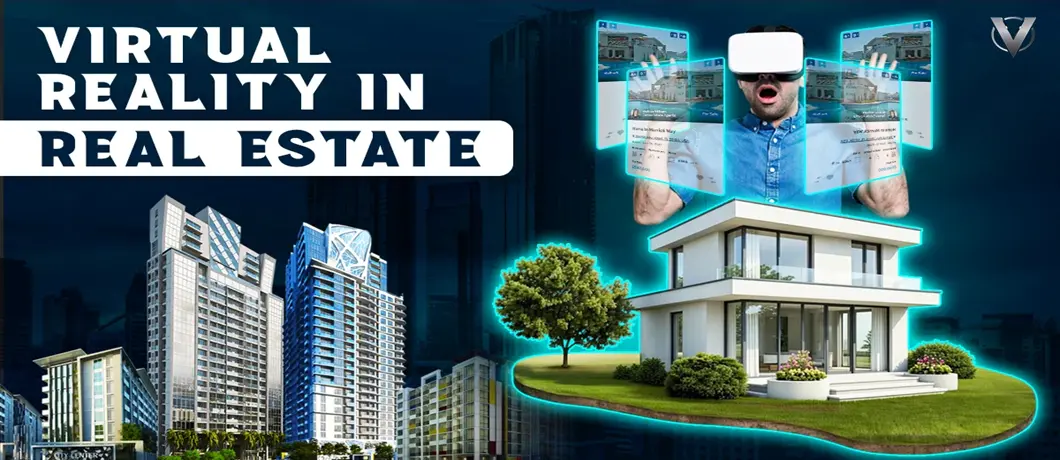
Buyers demand to see the property before any commitment. But the biggest hurdle is visits that take time, money, and coordination between buyers and agents. For the international buyers in Dubai who are looking for property in India or NRI investors looking at Dubai for property investment, that friction is even greater. Virtual Reality in real estate is solving this problem in minutes.
Dubai recorded over 270,000 property transactions last year, in which virtual tours played a crucial role in NRI buying decisions. VR is now moving from luxurious technology to a necessary part of the sales process in India. This Blog will tell you what VR in Real Estate, where it works, and how to get started with this immersive technology.
What VR in Real Estate Actually Means
While Practice, VR in Real Estate covers three major formats. Virtual 360-degree tours join wide views together so that buyers can roam from one room to another without any real problem. 3D virtual tours give you the best and most accurate sense of layout and dimensional flow. Headsets are the most immersive experiences that one can have. It is used at sales offices and launch events in big cities like Dubai, Mumbai, and Bengaluru.
All three formats are dedicated to giving a buyer a realistic feel of the property before paying a visit in person. For most people, a mobile or a desktop is enough. Headsets are an upgrade, not a requirement.
Why VR is Becoming a Standard, Not a Trend
Buyers not only want information about the property, but they also want more and more clarity. A great Virtual Try-On Tour actually answers all the questions that popped up in the buyer's head that maybe photographs never can. Does this apartment feel spacious or cramped? How does natural light move through the rooms? Can the balcony be used practically ?
The quality of each site visit gets better when buyers do their research at home, whether in Delhi or in Dubai, and shortlist before visiting the stores. Fewer wasted appointments. More serious, focused buyers. That is why Virtual Reality in Real Estate is becoming a standard of workflow and not an experiment among developers in India and the UAE.
Where It Works Best
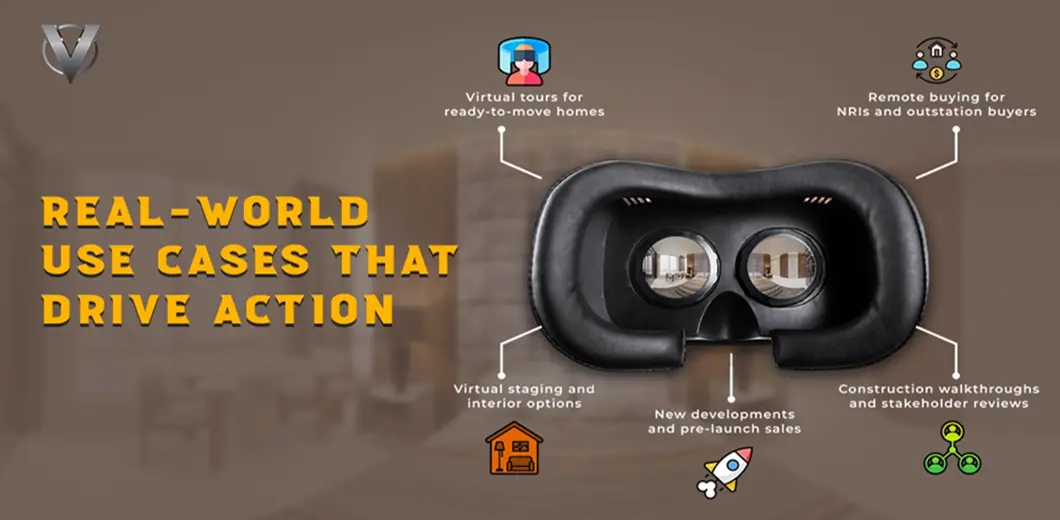
Ready-to-move homes
Virtual tours provide the opportunity for a buyer to view the site on their own, consult with family members, and have the chance of coming to the site already convinced. It is also beneficial to the sellers; instead of showing the flow of the property using awkward angles in the photos, a professional tour shows the flow. Virtual Reality in Real Estate brings that ease to the potential buyer’s life.
NRI buyers - India & UAE
The NRI buyers in Dubai, Abu Dhabi, and the entire Gulf are a significant portion of the high-end Indian real estate buyers. Similarly, Indian investors who are targeting the off-plan market in Dubai are also affected. VR in Real Estate removes the necessity of flying into a shortlist. A Dubai customer is able to tour a Mumbai apartment. A Business Bay apartment can be explored by an investor in India, prior to the payment plan being signed.
Off-plan & pre-launch sales
The predominant model of sales in Dubai is off-plan. A considerable percentage of the properties in such locations as Downtown Dubai, the Palm Harbour, and the Dubai Creek Harbour are sold even before the construction is finished. Virtual Reality in Real Estate enables designers to demonstrate to purchasers the lobby experience, unit tour, and contextual amenities, as well as finish options, before a single level is constructed. This directly translates the curiosity into bookings.
Virtual staging
Unoccupied houses appear chilly and are difficult to imagine. Virtual staging illustrates the appearance of furniture pieces, the appearance of the upgrade packages, and even what other interior designs would feel like in a particular unit without the actual setup of the same. This all can be done with the help of Augmented Reality, which is a part of XR technology.
The UAE Market: Why VR in Real Estate Matters More Here?
The nature of Dubai and its real estate market is such that VR is more valuable here than in hardly any other market.
- International buyers, the biggest group of which includes India, Pakistan, Russia, China, and the UK, are unable to visit prior to the expiry of the booking window.
- Off-plan reigns supreme; consumers are getting into a product that is yet to come into being.
- There is a high luxury expectation, and high presentation in luxury is an indicator of credibility in the developer.
- The Indian professionals in the UAE are also one of the largest purchaser groups of the Dubai property and the Indian property in India.
The competitive edge that developers are developing by integrating Virtual Reality in Real Estate today is creating a competitive edge that will become the baseline of the market in the next two to three years.
How to Get Started
- State the objective : Buyers should set a specific goal that brings the actual leads that are qualified, which also avoids wasteful visits or any type of pre-launch reservations.
- Select the appropriate format : 360 tours to provide the speed, 3D to provide the clarity of the layout, and headsets to provide the high-value launching.
- Make mobile default : When most buyers begin on a phone, rather than a headset.
- Label all things in an understandable way : Name of the room, size of the area, features of the area, which are hotspots.
- Include the obvious CTA : Book a visit, ask a price, talk with the agent.
Track what matters. Virtual Reality in Real Estate brings a great change in the buyer’s thinking. Now they can freely invest their leisure time in fun activities rather than finding a property.
The Takeaway
VR in Real Estate is all about helping buyers to find their property with a clear vision and confidence in every customer. The confidence that buyers can actually think about finalizing the property before paying and visiting physically, and wasting their time and money.
The Real Estate Industry is evolving for the good; buyers can visualize and make up their minds before buying it.
XR in Real Estate
also plays a crucial role beside VR, as only visualizing is not sufficient, but planning and interior decor are also equally important, which comes with Extended Reality.
When done well, it creates trust more quickly, minimizes wasted effort by the agents and developers, and targets buyers wherever they may be, from Dubai to Delhi, Abu Dhabi to Ahmedabad. In need of VR solutions that are developed to suit the Indian and the UAE property market, VYUG Metaverse Development Platform can assist.
Faq’s
Was this helpful?

Leave a Reply
Your email address will not be published. Required fields are marked *
User Comments
Related Articles
Virtual Reality Game Development: Th...

Virtual Try-On Solutions: A Game Cha...

Virtual Sustainable Living: Alternat...
Newsletter Sign-up
